
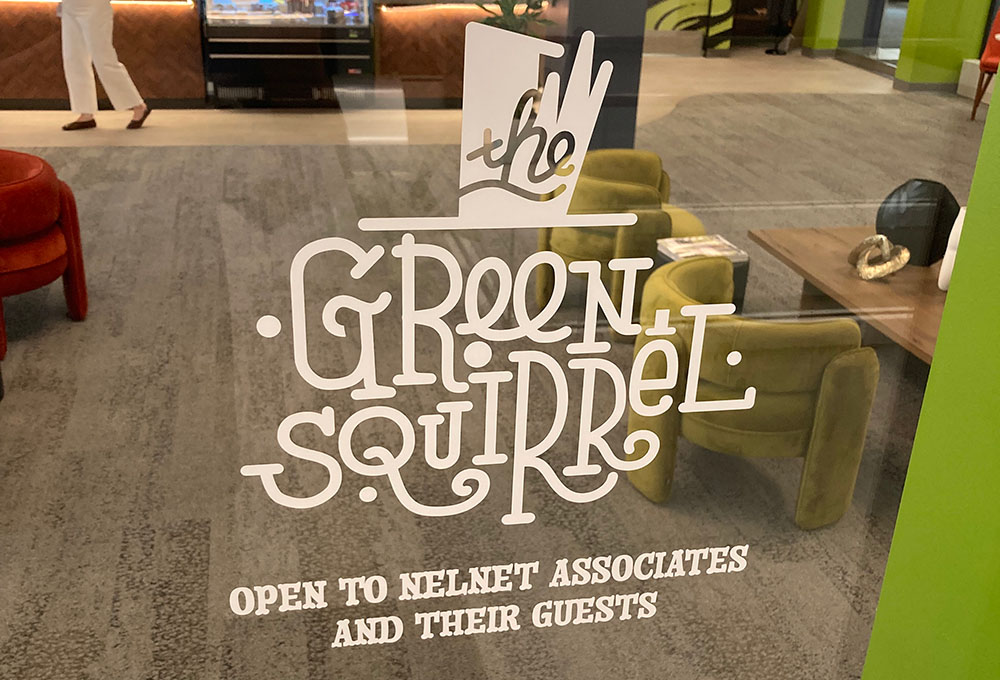
When Nelnet leadership began exploring ways to reimagine an empty first-floor space inside Nelnet Center, the possibilities were wide open. The area could have become additional office space. Instead, leaders saw an opportunity to create something that reflected the people who would use it every day. Through associate input, creativity, and collaboration, that vision became The Green Squirrel.
“We really want to think about this opportunity on the first floor of the Nelnet space … where there’s a ton of opportunity to show what Nelnet’s all about,” says Chief People Services Officer Emily Olinger. “What if we designed it for our team, for the people at Nelnet, not some corporate space, but really to represent the people of Nelnet?”
That guiding idea influenced every decision that followed — from the name to the branding to the artwork displayed throughout the space.
An Unexpected Name
One of the project’s most memorable elements began with a simple suggestion.
Olinger says Director of Associate Experience Jessica Schumacher approached her with an idea for the café’s name.
“She came to me one day and said, ‘I’ve got the name.’ And she goes, ‘The Green Squirrel.’ And I said, ‘Why the heck would we name it The Green Squirrel?'” Olinger says.
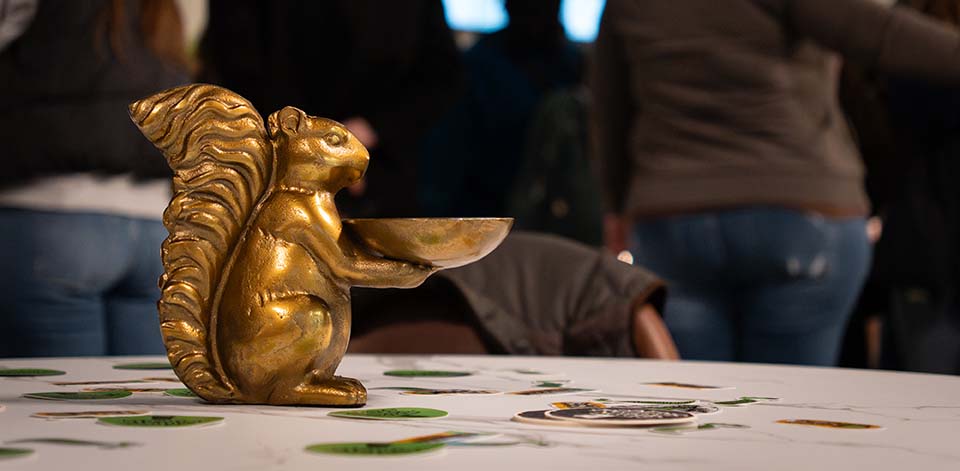
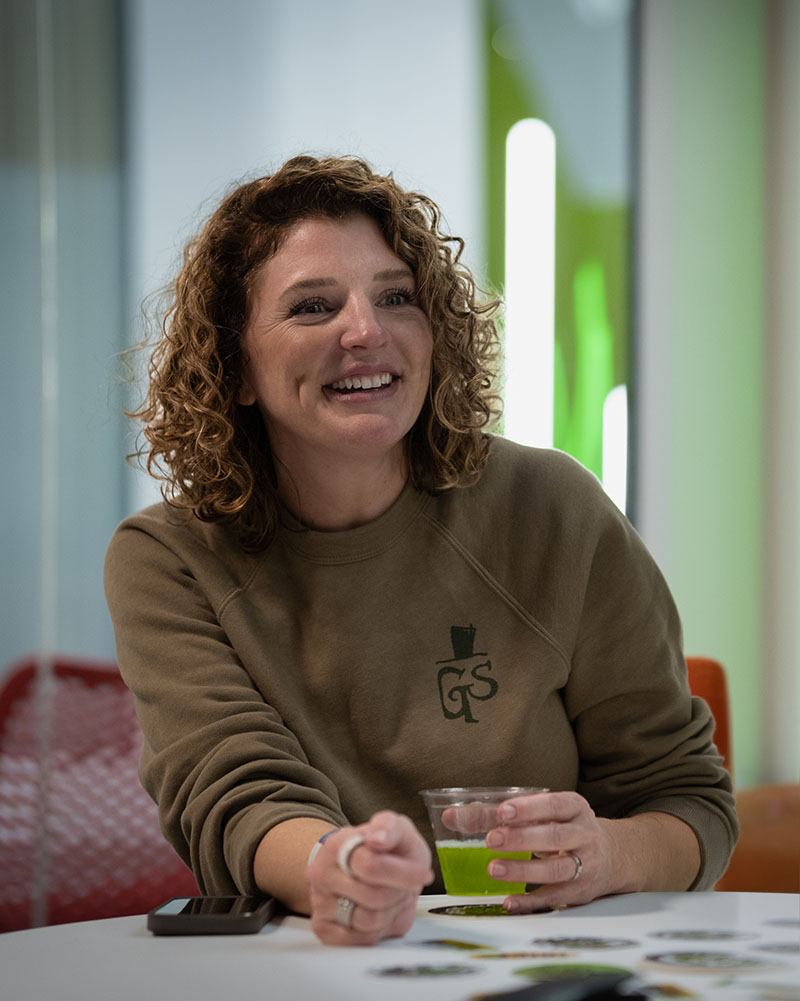
The name came from Schumacher’s family’s affinity for squirrels combined with Nelnet’s signature green brand color. At first, the connection wasn’t immediately obvious. But after sitting with the idea, Olinger and others began to see something deeper.
They thought about the characteristics squirrels are known for — gathering, resourcefulness, energy, and community. Those traits felt familiar.
“We like to gather, we like to do a little bit of weird. We like a little bit of quirkiness or unique and that feels right,” Olinger says.
What began as a quirky name eventually became a reflection of the culture and personalities that make Nelnet unique.
Turning an Idea Into a Brand
Once the name was established, the focus shifted to creating a visual identity that could bring the concept to life.
“For a brand system to be successful, it really only requires three things,” says Randall Myers, Director of Corporate Marketing. “First and foremost, it needs to be distinctive and remarkable. It has to be scalable and work across a number of different applications and environments. And finally, it needs to convey the meaning and attributes of the brand itself.”
“A mark like this really helps to inspire creativity,” Myers says. “It encourages conversations, collaborations and builds a sense of community, which is exactly what we needed to accomplish in a our café.”
That philosophy became the foundation for the project and helped guide decisions throughout the branding process.
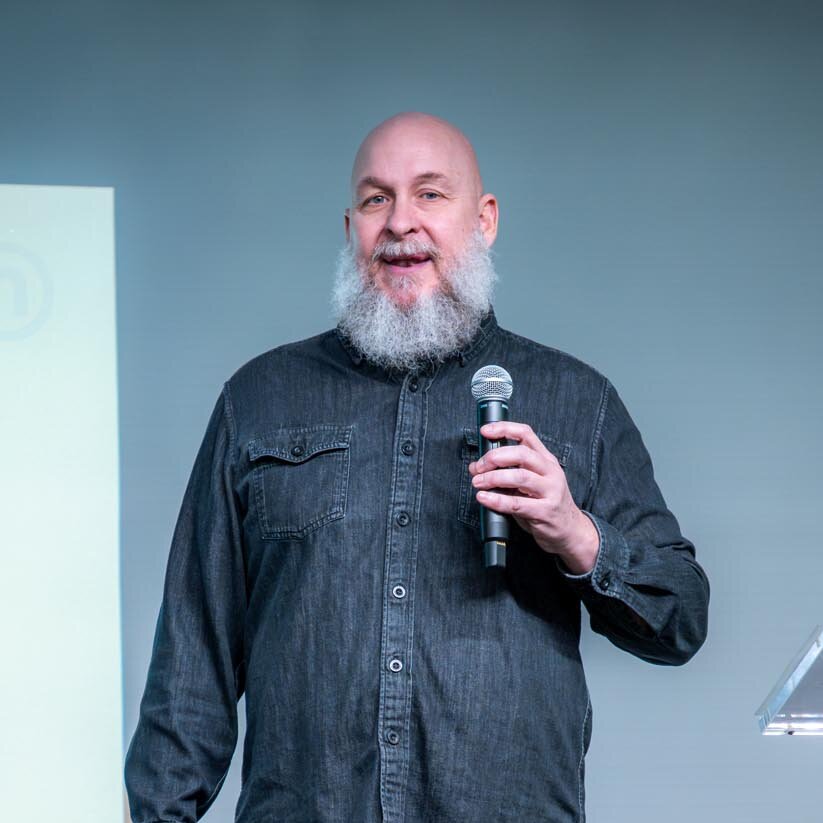
Working with Associate Creative Director Peter Morris, Myers helped develop a brand that could extend across everything from signage and environmental graphics to merchandise and menus. But the goal wasn’t simply to create a logo.
The team wanted the brand to support the same experience the space was designed to create.
Designing a Brand With Personality
A strong brand strategy provided the framework, but Morris helped bring The Green Squirrel’s personality to life.
“Peter was the lone designer on the project, but given his range as an artist and designer, he was really able to express the brand system in a way that was unique and perfectly suited to the project,” Myers says.
The team wanted the visual identity to reflect the same individuality and personality found within the organization itself.
Early Logo Ideas
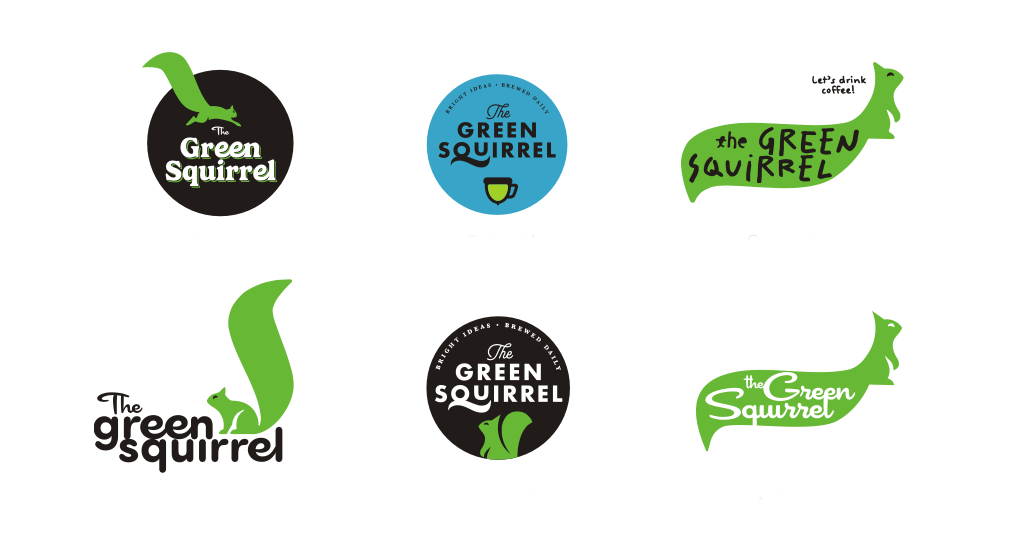
Final Green Squirrel Logo Versions
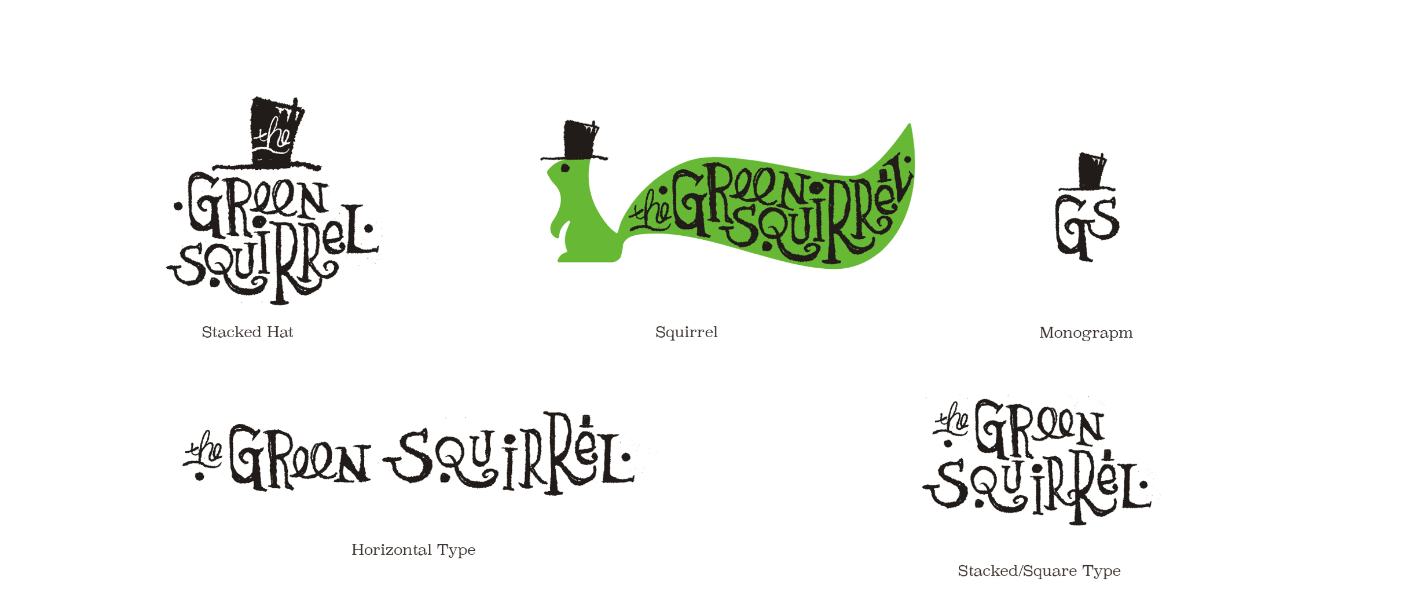
“We wanted the typography and overall design system to have a personality as unique as the associates who will use the space,” Myers says. “Hand-generated typography is the perfect way for that to be conveyed.”
One of the brand’s most recognizable features is the squirrel’s top hat, which Myers says emerged early in the design process.
“It adds a quirky, unexpected element to the design,” he says.
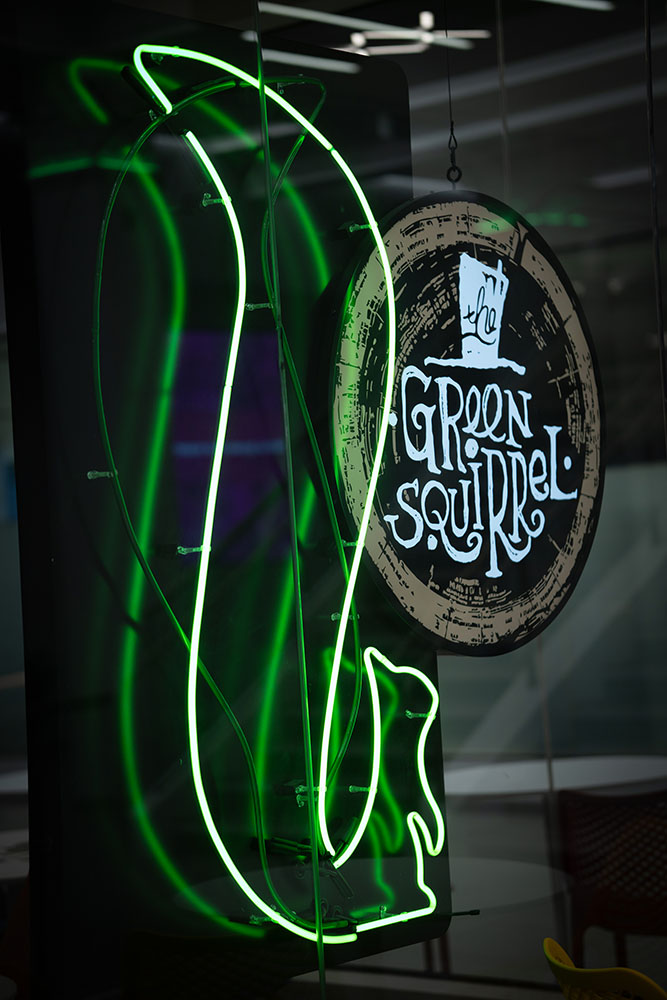
That sense of playfulness appears throughout the environment. Myers points to details such as the flickering neon tail in The Green Squirrel sign and the use of top hats within menu graphics as examples of how the squirrel’s personality is woven into the space.
“Quirky is probably the best description of how the squirrel’s personality has been integrated into the space in unexpected ways,” Myers says.
The goal wasn’t simply to create a café that looked different. The team wanted to create an environment that encouraged interaction, creativity, and fresh thinking.
“We felt that a unique, creative environment would help to encourage fresh, innovative perspectives, with the added benefit of random collisions with associates you don’t normally interact with,” Myers says.
Creativity Through Collaboration
The Green Squirrel reflects more than the creativity of a few individuals. It’s the result of the combined contributions of associates across multiple teams and disciplines.
Its name originated with one associate. Its visual identity was developed by another. Facilities, marketing, communications, operations, and other stakeholders all helped shape the experience. The result was a space influenced by a variety of perspectives and ideas.
“It really speaks to the innovative, creative, and collaborative culture of the organization,” Myers says. “Differentiation happens through the unique perspectives that ultimately impacted the designs throughout the system.”
As the project progressed, more people became involved.
“There came a point in time where bringing others in honestly got the project to the finish line,” Olinger says.
The collaborative process mirrored the purpose of the finished space. The Green Squirrel was built through collaboration and designed to encourage more of it.
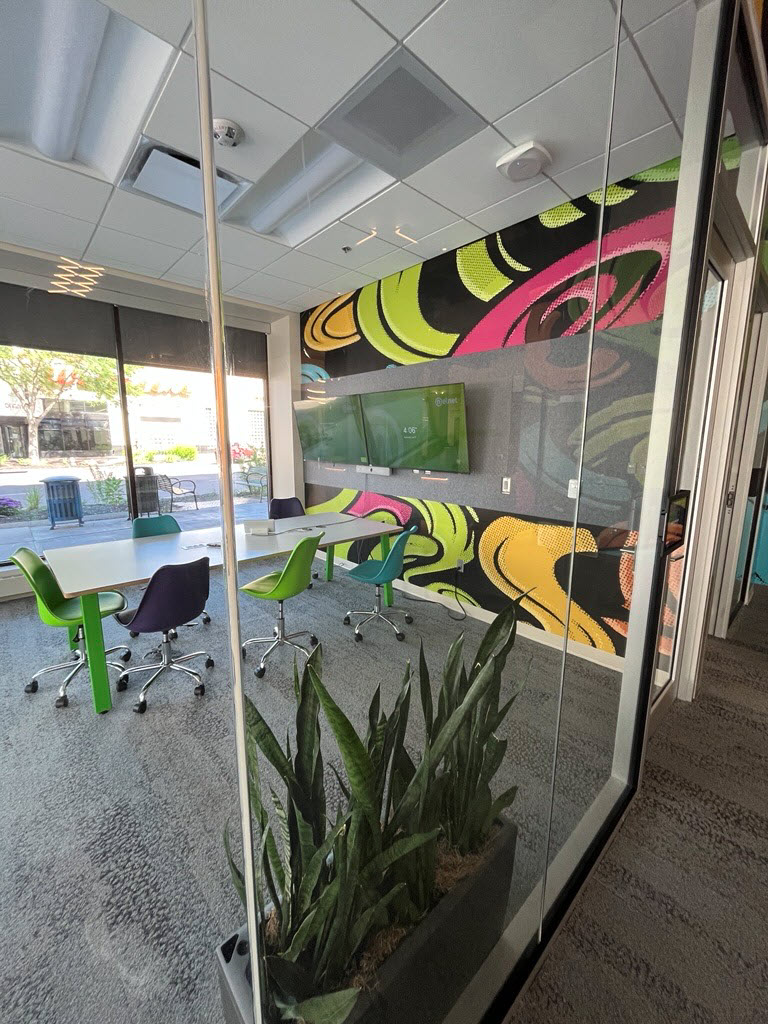
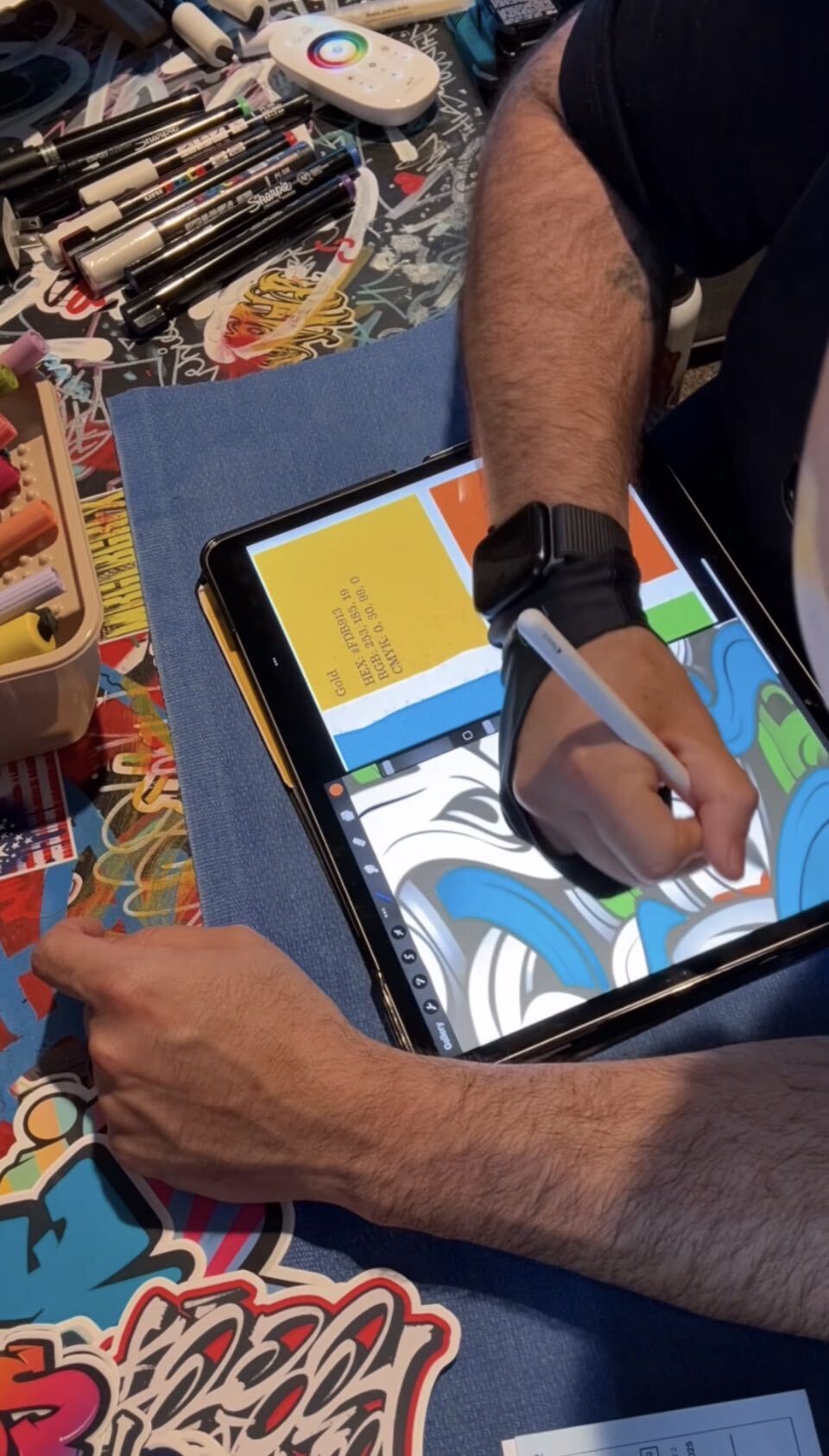
One of the most distinctive elements in the space is the large-scale graffiti-inspired artwork that extends throughout The Green Squirrel. Created by former Nelnet Business Analyst Supervisor and artist David Guerrero, the mural adds movement, color, and energy while reinforcing the space’s creative spirit.
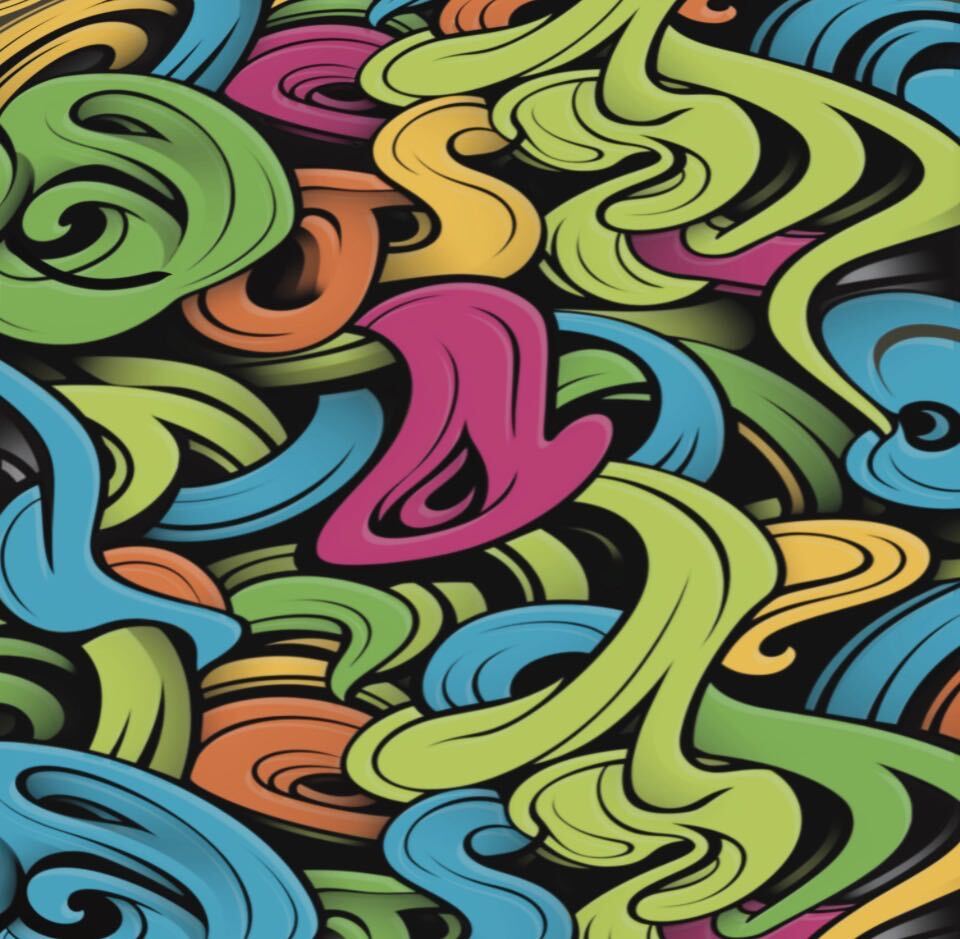
For Guerrero, the opportunity to contribute his artistic talents to a Nelnet project was especially meaningful. “Designing the cafe artwork was an incredible full-circle moment for my nearly 20-year journey at Nelnet,” Guerrero says. “The creative freedom I was given for such a major project made it possible to build something that truly felt designed with associates in mind. I felt immense support from everyone involved — Jeff Noordhoek, Em Olinger, Deann Wenger, Jessica Schumacher, Randall Myers, and Peter Morris and his team.”
Guerrero says associates from across the company later reached out to share photos of sketches and artwork he had created for them over the years. The response reinforced how meaningful creative contributions can be in building connections across an organization.
“It really speaks to the innovative, creative, and collaborative culture of the organization,” Myers says. “Differentiation happens through the unique perspectives that ultimately impacted the designs throughout the system.”
As the project progressed, more people became involved.
“There came a point in time where bringing others in honestly got the project to the finish line,” Olinger says.
The collaborative process mirrored the purpose of the finished space. The Green Squirrel was built through collaboration and designed to encourage more of it.
More Than a Café
Today, The Green Squirrel serves as a place where associates gather, connect and exchange ideas. But for the team behind the project, the space represents something bigger than coffee.
Myers says the environment was intentionally designed to encourage the kinds of interactions that spark new ideas and strengthen connections across teams.
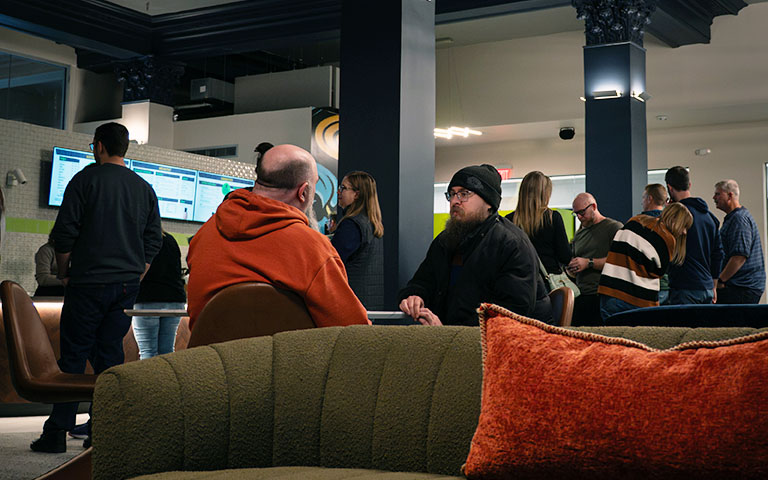
“There are a lot of layers to this,” Myers says. “Innovation often comes from random collisions. Cafés and coffee shops are known to be places where great ideas and connections happen, and we were fortunate to have that brought in house.”
By creating a space that feels welcoming, creative, and different from a traditional office environment, the team hoped to encourage associates to connect with colleagues they might not otherwise encounter during the workday.
“Great work rarely happens in isolation,” Myers says. “This space gives us the room to bring people together and think out loud.”
The Green Squirrel may have started as an unconventional idea and an unexpected name, but it ultimately became something larger. The result is a space created by associates, for associates — one designed to foster creativity, collaboration, and community while reminding us what can happen when great ideas are given room to grow.
Join Us: Where Your Story Becomes Our Story
The Green Squirrel began with an empty space and an unconventional idea. It became a brand shaped by associate creativity, a gathering place designed around collaboration, and a reflection of the people who helped bring it to life.
The Green Squirrel is just one example of what can happen when associates are empowered to share their ideas, talents, and perspectives. If you’re looking for a career with a company that values creativity, initiative, collaboration, and associate input, explore opportunities to join the team and discover what #LifeAtNelnet can look like for you.